Unlocking Cost Savings: How 3D Rendering Revolutionizes Marketing Strategies and Content Creation
- Rendr Flow

- Dec 15, 2025
- 3 min read
Marketing teams often face tight budgets and demanding schedules, making it challenging to produce high-quality visual content consistently. Traditional photoshoots, while effective, come with significant costs and logistical hurdles that can slow down campaigns and limit creativity. Fortunately, 3D rendering offers a powerful alternative that can reduce expenses and increase flexibility in marketing content creation.
This post explores how 3D rendering transforms marketing by cutting costs, speeding up revisions, and enabling unlimited creative possibilities. We will also look at real-world examples that demonstrate its value and encourage marketers to consider this technology for their next campaign.
The Hidden Costs and Challenges of Traditional Photoshoots
Photoshoots require careful planning, coordination, and resources. Here are some common limitations that add to marketing costs:
High expenses: Hiring photographers, models, stylists, renting locations, and securing equipment can quickly add up. A single shoot can cost thousands of dollars depending on scale and complexity.
Scheduling conflicts: Coordinating availability of all participants often causes delays. Weather or unforeseen issues can force rescheduling, increasing costs and pushing back deadlines.
Limited flexibility: Once a shoot is done, making changes to angles, lighting, or product variations means organizing another session or extensive post-production work.
Physical constraints: Some products or concepts are difficult to photograph effectively due to size, fragility, or location restrictions.
These factors can restrict the volume and variety of content marketers can produce, impacting campaign reach and engagement.
How 3D Rendering Enables Unlimited Content Creation
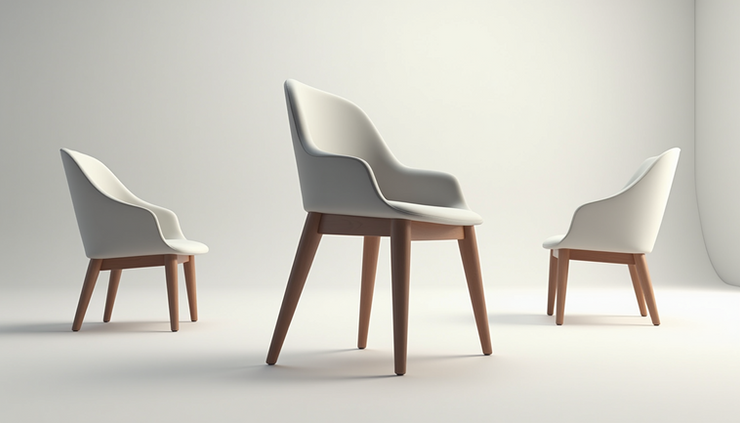
3D rendering uses computer-generated imagery to create realistic visuals of products, environments, or concepts. This approach offers several advantages over traditional photoshoots:
Multiple angles and variations: Marketers can generate images from any viewpoint without reshooting. Different colors, textures, or configurations can be created quickly.
No physical setup required: There is no need for physical products, locations, or props. This is especially useful for prototypes or items not yet manufactured.
Consistent quality: Lighting and shadows can be controlled precisely, ensuring uniformity across all visuals.
Scalability: Once a 3D model is created, it can be reused for various campaigns, formats, and platforms without additional costs.
This flexibility allows marketing teams to produce a wide range of content tailored to different audiences and channels without the typical constraints of photoshoots.
Faster Revisions and Greater Design Flexibility
Marketing campaigns often require quick adjustments based on feedback or changing trends. Traditional photoshoots make this process slow and costly:
Reshoots require booking new sessions, which can take days or weeks.
Editing photos to change colors or details is limited and time-consuming.
With 3D rendering, revisions happen much faster:
Designers can modify models instantly, changing colors, materials, or shapes without starting over.
New versions can be rendered and shared within hours.
This speed allows marketers to respond quickly to market demands or client requests.
The ability to iterate rapidly reduces downtime and keeps campaigns agile, saving both time and money.
Real-World Examples of 3D Rendering in Marketing
Several companies have successfully integrated 3D rendering into their marketing strategies, achieving notable cost savings and creative benefits.
IKEA
IKEA uses 3D rendering extensively to showcase furniture in various room settings. Instead of photographing every product in multiple environments, they create digital models that can be placed in virtual rooms with different lighting and decor. This approach reduces the need for physical staging and photoshoots, cutting costs and speeding up catalog production.
Adidas
Adidas employs 3D rendering to design and market new shoe models. They create detailed digital prototypes that allow them to visualize and promote products before manufacturing. This reduces the number of physical samples needed and accelerates the product launch cycle.
Automotive Industry
Car manufacturers often rely on 3D rendering to display new models from all angles without building physical prototypes. This saves millions in production and photography costs while enabling marketing teams to create immersive content for websites, brochures, and virtual showrooms.
These examples show how 3D rendering can replace or complement traditional photoshoots, offering more control and cost efficiency.
Why Marketers Should Consider 3D Rendering
Switching to or incorporating 3D rendering in marketing offers several clear benefits:
Lower overall costs by reducing expenses related to physical shoots and reshoots.
Greater creative freedom to explore different looks and concepts without limitations.
Faster turnaround times for content updates and campaign adjustments.
Improved consistency across all marketing materials.
Sustainability benefits by cutting down on travel, materials, and waste associated with physical shoots.
For businesses looking to maximize their marketing budgets and stay competitive, 3D rendering provides a practical and scalable solution.


Comments